
1
We map your symptoms to the nerves worth testing.
Nerve testing we do here in the clinic: which nerve is involved, roughly where, and how well it is still carrying the signal.
What It Is
The nerve conduction study, the NCS half, sends a small electrical pulse along a nerve and measures how fast and how strongly the signal arrives at the other end. Slow or weak points to a nerve that is compressed or not conducting properly, and roughly where along its length.
Electromyography, the EMG half, reads the electrical activity inside a muscle to see whether the nerve supplying it is still doing its job. That part uses a fine needle electrode in the muscle.
Together they answer what an exam on its own cannot: whether the numbness in your hand starts at the wrist or up at the neck, whether leg symptoms are coming from a nerve root, and how much of the nerve is involved. Neither test does anything to the nerve. What you leave with is findings, and a plan built on those rather than on somebody’s best guess. The alternative is months of work aimed at the wrong level.
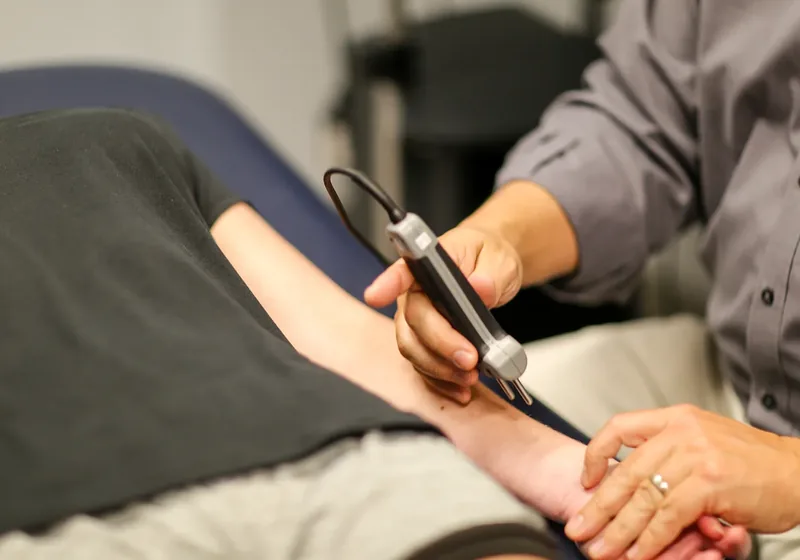 Explained before anything starts
What It Answers
You’re not imagining it, and you’re not being difficult for wanting a straight answer. Aline M. researched the New Orleans area for nerve care and got hers here: “I was able to get a Nerve Conduction Studies test and EMG at their location with Dr. Ron. He was very knowledgeable on nerve trauma / damage and explained the test results in terms I could understand.”
What An Appointment Looks Like
1
We map your symptoms to the nerves worth testing.
2
Small electrical impulses, then fine needle electrodes. Uncomfortable for some people, and quick.
3
Then we sit down and explain what the readings show.
Why It Helps
It names the nerve, not just the area.
Readings, not guesswork, about the signal.
It tells a neck problem from a wrist one.
Done here, so the answer isn’t another trip.
Pairs Well With
Questions, Answered
Straight answer: for some people, yes. The nerve conduction impulses feel like a quick static shock, brief and repeated. The EMG portion uses a fine needle electrode in the muscle, which most people describe as a short cramp or ache. Neither part lasts long, and we’d rather tell you that now than surprise you in the room.
No, and we won’t pretend otherwise. This is a test, so its whole value is the information it produces: which nerve is involved, roughly where, and how much of it. That is what makes the plan afterward specific instead of general.
Nerve testing is billed as a diagnostic study rather than a therapy visit, and plans differ on what they want in hand before one happens. Use the benefits check and we’ll confirm what yours requires, or call us at (504) 733-0254 and we’ll work it out with you.
Book Your Visit
Request a time and a real person calls you back. No phone tree, no ‘someone will reach out.’ Just a plan.
4.9 · 650+ 5-star reviews
Five short questions. About a minute.
Step 1 of 6
That’s the hard part done. We’ll call during business hours to lock in your time.
Visit Us
Westbank, Marigny, Elmwood. Whichever is closest, you get the same care and the same number to call.