
Where we start
Pain
Calm the pain down.
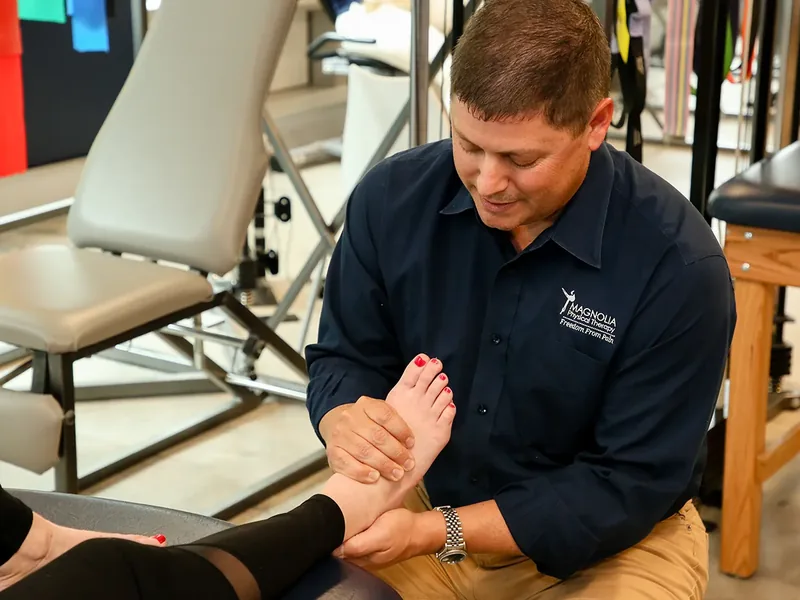
Hands-on work on the irritated fascia where it anchors at the heel, including instrument-assisted soft tissue mobilization and ultrasound, plus taping to take the pull off it.
What We Treat
The first step out of bed, and you already know how it’s going to feel before your heel lands. A cause-first evaluation finds what’s overloading that arch, because the heel is where it hurts, not where it starts.
Sound Familiar?
Two or more? You’re the one who just works through things. That habit got you this far, and it’s also why this heel has had a year to settle in.
Why It Happens
The plantar fascia is a thick band along the bottom of your foot, running from the heel bone out to the toes, and it holds your arch up every time you take a step. Overload it and it gets irritated where it anchors at the heel. Overnight it settles and shortens, which is exactly why the first step in the morning is the worst one of the day, and why standing up after sitting a while feels like starting over.
The overload almost always comes from somewhere other than the heel. A tight calf that won’t let your ankle bend, so the arch takes the strain instead. A foot that rolls in too far as you load it. The small muscles inside the foot going weak, leaving the fascia to hold the arch by itself. Shoes that stopped supporting anything a year ago. That’s also why it keeps coming back: rest calms the tissue, but the mechanics that overloaded it are still there waiting. A cause-first evaluation sorts out which of those is yours.
The Honest Truth
Nobody regrets starting too early. Think about how much you already schedule around this heel, and whether you want to still be doing it next spring.
How We Fix It
Every plan has an endpoint. Here’s what our four-phase program looks like when the problem is your heel and arch.
Where we start
Pain
Hands-on work on the irritated fascia where it anchors at the heel, including instrument-assisted soft tissue mobilization and ultrasound, plus taping to take the pull off it.
Once the pain settles
Prime
We get the ankle bending and the calf lengthening again, because a calf that won’t give sends the load straight down into your arch, step after step.
Once motion returns
Perform
We strengthen the small muscles inside the foot that are meant to hold your arch, so the fascia stops doing that job alone. Orthotics can support the foot while the strength catches up.
Before we sign off
Prevent
Footwear, standing and walking loads, and how you build mileage back, so the mechanics that caused this don’t quietly rebuild it. That’s the endpoint.
He had back problems and I had sciatica. Years ago, they cured my plantar fasciitis. The staff were incredibly friendly, encouraging, knowledgeable, and effective with their treatments. We both highly recommend Magnolia PT as a great place to receive treatment.
Melanie S. · Plantar fasciitis and sciatica, treated with her husband
Then: your heel decided how the morning started
Now: you decide how the morning starts
Questions, Answered
No, and waiting on one usually just delays the start. Plantar fasciitis is identified from your story and a hands-on examination: where it hurts, when in the day it hurts, how far your ankle bends, how your arch loads. A heel spur on an X-ray gets blamed a lot, but plenty of people have one and no pain at all. If imaging ever genuinely becomes necessary, we’ll help you get it.
Keep moving, but not through pain that lingers for hours afterward. Stopping altogether isn’t the answer either, because rest weakens the muscles that support your foot and leaves the fascia holding your arch on its own. A licensed physical therapist works out how much standing and walking your foot can take right now, and which movement is worth doing anyway, then moves that line as the heel improves.
We won’t put a number on it before we’ve looked at your foot, and anyone who does hasn’t looked. What you get instead is a plan with an endpoint. After the evaluation you’ll know what’s overloading the fascia, which of the four phases you’re starting in, Pain, Prime, Perform or Prevent, and what has to be true for you to be finished. You’ll always know where you are in that plan and what’s left, instead of booking appointments indefinitely.
Book Your Visit
Request a time and a real person calls you back. No phone tree, no ‘someone will reach out.’ Just a plan.
4.9 · 650+ 5-star reviews
Five short questions. About a minute.
Step 1 of 6
That’s the hard part done. We’ll call during business hours to lock in your time.
Visit Us
Westbank, Marigny, Elmwood. Whichever is closest, you get the same care and the same number to call.