
Where we start
Pain
Turn the volume down.
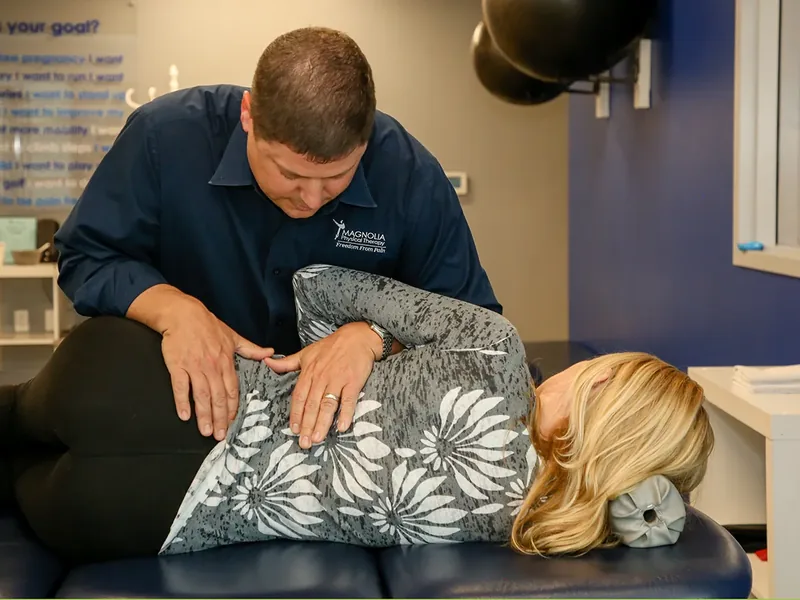
Manual therapy, dry needling and ultrasound quiet guarded tissue, paired with the plainest explanation anyone has given you of why it still hurts.
What We Treat
Pain that outlasted the injury, and appointments that ended in “wearing down” or “getting older”. Here you get believed first, and then you get a plan.
Sound Familiar?
Two or more? Keep reading.
Why It Happens
Pain is an alarm. After an injury the alarm is supposed to quiet down as the tissue heals. Sometimes it doesn’t. The nerves carrying the signal stay switched on, the spinal cord and brain get better and better at hearing them, and the volume stays up long after the damage has gone. That’s why a scan can come back clean while the pain is completely real. It also explains the parts that sound made up: the flare with no trigger, the sore patch that a waistband sets off, the bad week after a night of no sleep.
A sensitized system can be turned back down. It takes movement dosed at a level that doesn’t trip the alarm, hands-on work on the tissue and guarding that built up while you were protecting yourself, and honest attention to the sleep, stress and daily load that keep the volume high. Some of our own team have walked their way out of long-running pain, so nobody here needs convincing that yours is real. You’re the one who kept showing up for everybody else while this was happening. That’s why you’re late asking for help, not a reason to get less of it.
The Honest Truth
Nobody regrets starting too early. You’ve already given this years of your life. It doesn’t need another one.
How We Fix It
Every plan has an endpoint. Here’s what our four-phase program looks like when pain has been around for years.
Where we start
Pain
Manual therapy, dry needling and ultrasound quiet guarded tissue, paired with the plainest explanation anyone has given you of why it still hurts.
Once the pain settles
Prime
We find the dose your system accepts today, win back the range that years of guarding took, and build from there rather than from zero.
Once motion returns
Perform
Graded strength and real tasks at a level that holds, so your confidence comes from evidence instead of from hoping this is a good week.
Before we sign off
Prevent
You finish knowing your own triggers, the handful of resets that reliably work for you, and how to ride out a bad week without losing the ground you gained: that’s the endpoint, not another appointment.
I have severe adult-onset scoliosis - seemingly unfixable from other providers (too old for surgery) but after 12 sessions of 3x a week intense therapy (including dry needling) my back is 100 times better. It still hurts a little - scoliosis after all - but I am off pain meds; can walk as much as I want and have my life back.
Shared by Pamela D. · Adult-onset scoliosis
Before: the calendar belongs to the pain
After: the pain has to fit around you
Questions, Answered
Usually not, and with pain this long-standing another scan often muddies the water. It finds age-normal changes that were there before your pain started and were never the reason for it, which is how people end up with a label and no plan. What actually moves things is a careful history and hands-on testing of what your system tolerates right now. If a scan would change the plan, we’ll help you get one.
Yes, at the right dose, and the dose is the whole game. A sensitized system will flare from too much too soon, which is why “push through it” fails, and it winds tighter on total rest, which is why stopping fails too. A licensed physical therapist finds the amount your system will accept today, then adds a little at a time so the alarm quiets instead of shouting back.
Nobody can answer that honestly before looking at you, and you have probably been handed a number before that turned out to mean nothing. At your evaluation we map the four phases, Pain, Prime, Perform and Prevent, and name what has to be true for you to be finished. You’ll always know which phase you’re in and what’s left. That is a plan with an endpoint, which is a different thing from care with no horizon.
Book Your Visit
Request a time and a real person calls you back. No phone tree, no ‘someone will reach out.’ Just a plan.
4.9 · 650+ 5-star reviews
Five short questions. About a minute.
Step 1 of 6
That’s the hard part done. We’ll call during business hours to lock in your time.
Visit Us
Westbank, Marigny, Elmwood. Whichever is closest, you get the same care and the same number to call.