What We Treat

Stroke rehabilitation in New Orleans.

Movements that used to be automatic have to be learned again, one part at a time. Whether you are the one relearning them or the one helping, it starts with a cause-first evaluation, not a guess.

Walking Arm and hand use Standing and turning Talk to a Specialist

Sound Familiar?

Does this sound like you?

  • Movements that used to be automatic now have to be thought through, one part at a time
  • One side doesn’t answer the way the other one does
  • Your hand knows exactly what to do, gets partway there, and stops
  • The affected arm or leg holds tight, and keeps pulling back to the same position
  • Standing up from a chair or turning around takes a plan and a hand nearby
  • You have quietly stopped using the weaker side, because the other one is faster

Any of these sound familiar? Keep reading.

Why It Happens

A stroke changes how you move. We find what to retrain.

A stroke damages tissue in one part of the brain, and what changes afterward depends entirely on which part. That is why no two recoveries look alike, and why comparing yours to anyone else’s tells you very little. Muscles may not activate on command. Others may activate too much and hold tight. Sensation may report back inaccurately, which leaves balance with less to work with. And movements that were once automatic, standing, stepping, reaching, have to be run consciously again.

Physical therapy does not undo a stroke, and nobody honest will tell you it does. What it works with is the nervous system’s ability to reorganize around what is still there, which responds to specific, repeated, meaningful practice. So the job is to find exactly which part of a movement is failing, and practice that part, at the right difficulty, often enough for it to count. We also work against the habit of leaning on the stronger side, because the less the affected side gets used, the less it turns out to be able to do.

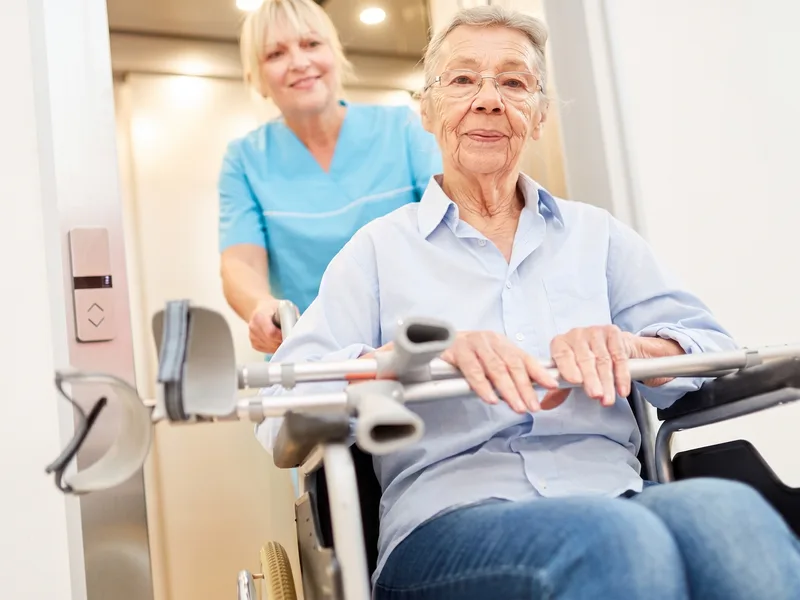
Caregiver assisting a stroke recovery patient who uses a wheelchair and forearm crutches

The Honest Truth

The list gets shorter before anyone mentions it.

If you keep waiting

  • The stronger side takes over everything, and the affected side gets less able the longer that goes on
  • Tight muscles settle into a shortened position, and range gets harder to win back than to keep
  • Things you used to do get done for you, out of love, and after a while the offer stops being made

If you start now

  • You leave the first visit knowing which part of the movement we are working on, and what the plan aims at
  • One-on-one with a licensed physical therapist, every visit, working the side that needs the work
  • Whoever helps you at home learns what to help with, and what to stand back and let you do

Nobody regrets starting too early.

How We Fix It

Our four phases. Built around what you want back.

Every plan has an endpoint. Here’s what our four-phase recovery program looks like after a stroke, one-on-one with a licensed physical therapist, every visit.

Where we start

Pain

Settle the symptoms. Get a baseline.

Pain is often not the presenting problem after a stroke, though a tight shoulder or a sore hip from moving differently can be, and hands-on work helps those. Phase one is mostly honest measurement: what activates, what does not, how sensation and balance are behaving, and which movement you most want back.

Once the pain settles

Prime

Get the range and the signal back.

Tightness gets worked out of the shoulder, hip and ankle first, because a joint that will not move cannot be retrained. Then we start waking up the muscles that are slow to answer, with hands, eyes and weight through the limb helping the signal find its way.

Once motion returns

Perform

Practice the real movement, often.

This is the bulk of the work: sitting to standing, stepping, turning, reaching, gripping, repeated at a difficulty that is hard but doable. Whole movements, not just pieces of them, aimed at the tasks you named on day one.

Before we sign off

Prevent

Keep it going at home.

You and whoever helps you go home with a program you can both run, the equipment that makes it safer, and clear instructions on what to keep pushing and what to leave alone. That’s the endpoint, not another appointment.

Questions, Answered

What people ask before booking for stroke rehabilitation.

Bring whatever you already have. The discharge summary and any therapy notes from the hospital or rehab stay tell us a great deal, and a current medication list matters too. A new scan is rarely what changes the plan. We start with a hands-on evaluation of what moves, what does not, and what you most want back, and if imaging ever becomes genuinely necessary, we’ll help you get it.

With the right supervision, yes, and it is a core part of recovery rather than a risk to it. Your medical team will have set limits, on blood pressure or on activity, and we work inside them and ask when we need something clarified. A licensed physical therapist stays with you for the session, sets the effort where you can sustain it, and adds difficulty only when the movement is holding up.

Recovery after a stroke is too individual for an honest number before we have seen you move, so we will not invent one. What we will do is lay the plan out in four phases, Pain, Prime, Perform and Prevent, with goals written down for each, and reassess against them as we go. You and your family will always know which phase you are in, what is next, and what we are aiming at. If we reach a point where more visits are not adding anything, we will say so.

Book Your Visit

Ready when you are.

Request a time and a real person calls you back. No phone tree, no ‘someone will reach out.’ Just a plan.

  • Hours Mon to Fri, 7:00am to 6:00pm
  • (504) 733-0254 Prefer to talk now? Call us.
  • Insurance benefits check before you book

4.9 · 650+ 5-star reviews

Five short questions. About a minute.

Step 1 of 6

So we know who to look for when you walk in.

Visit Us

Three clinics. One phone number.

Westbank, Marigny, Elmwood. Whichever is closest, you get the same care and the same number to call.